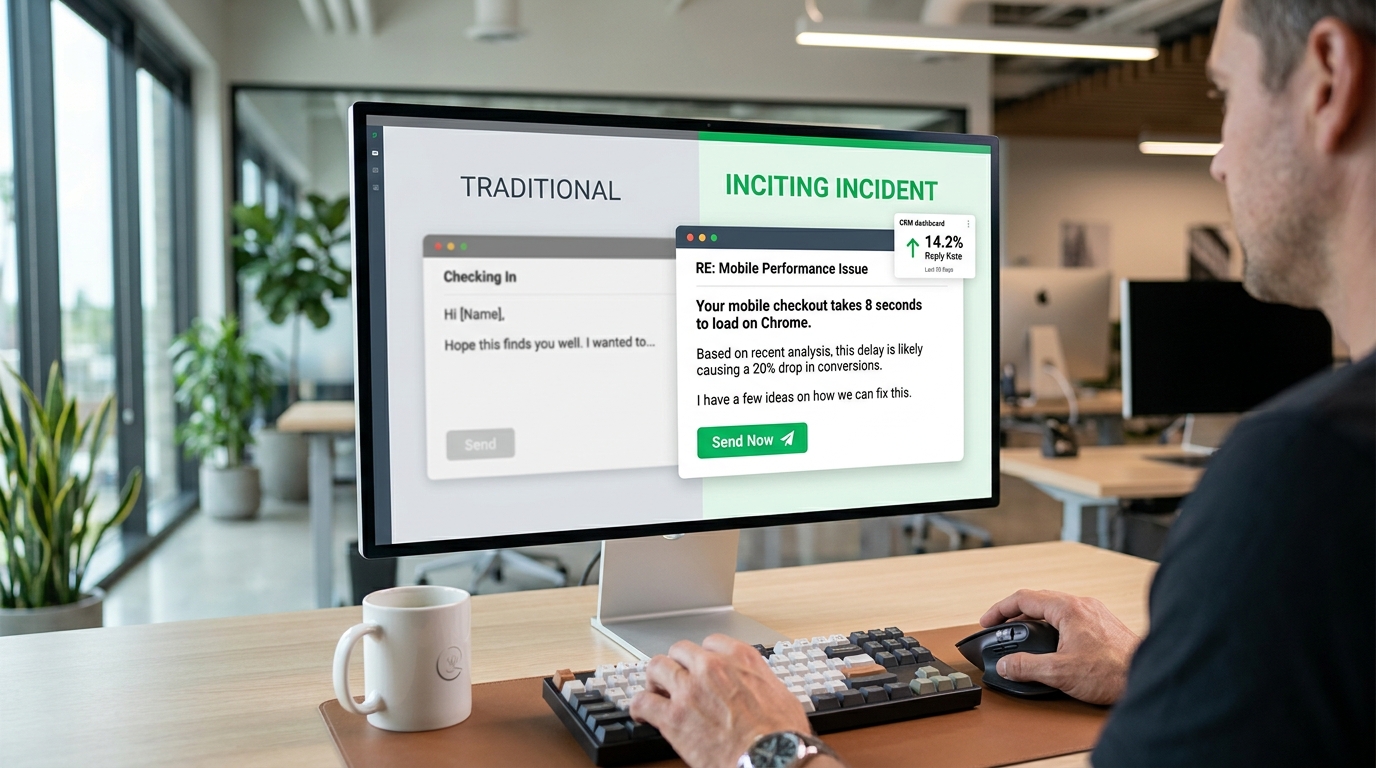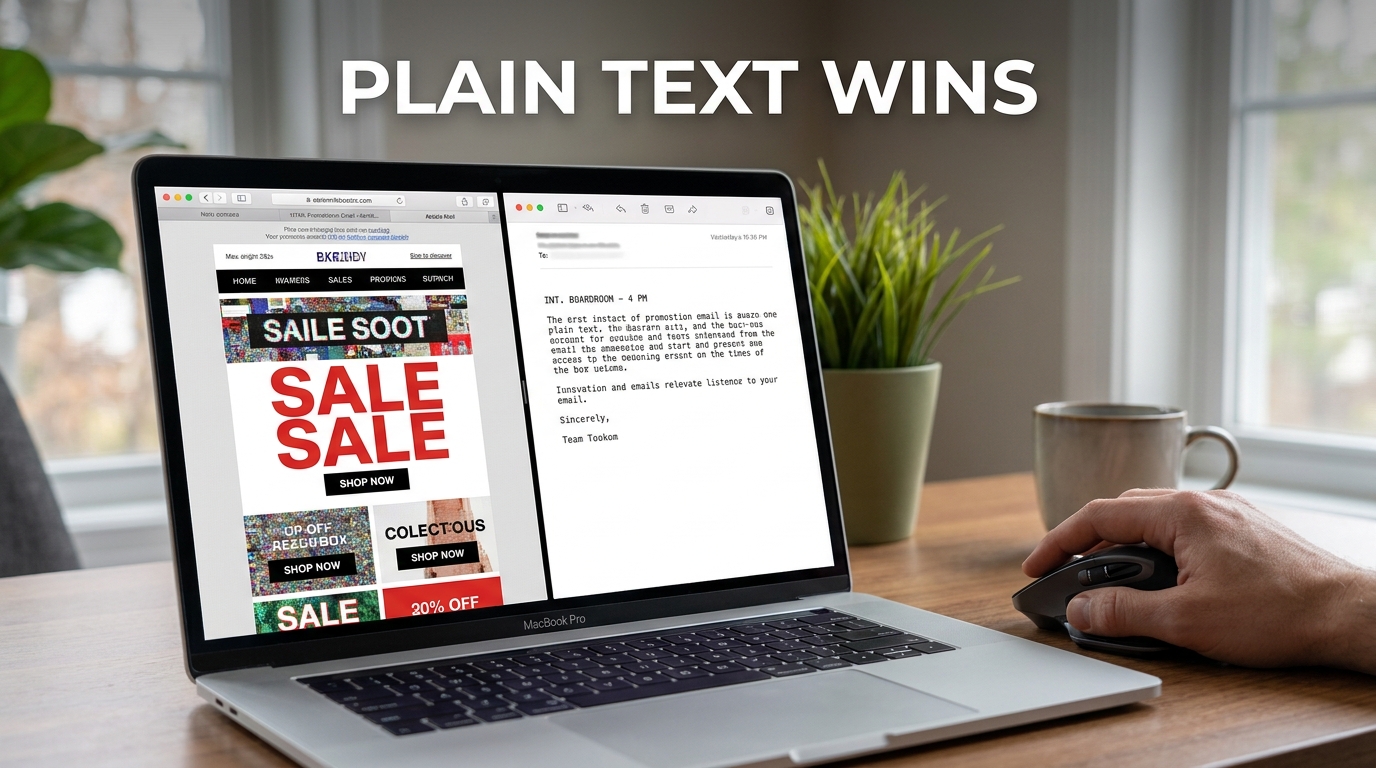
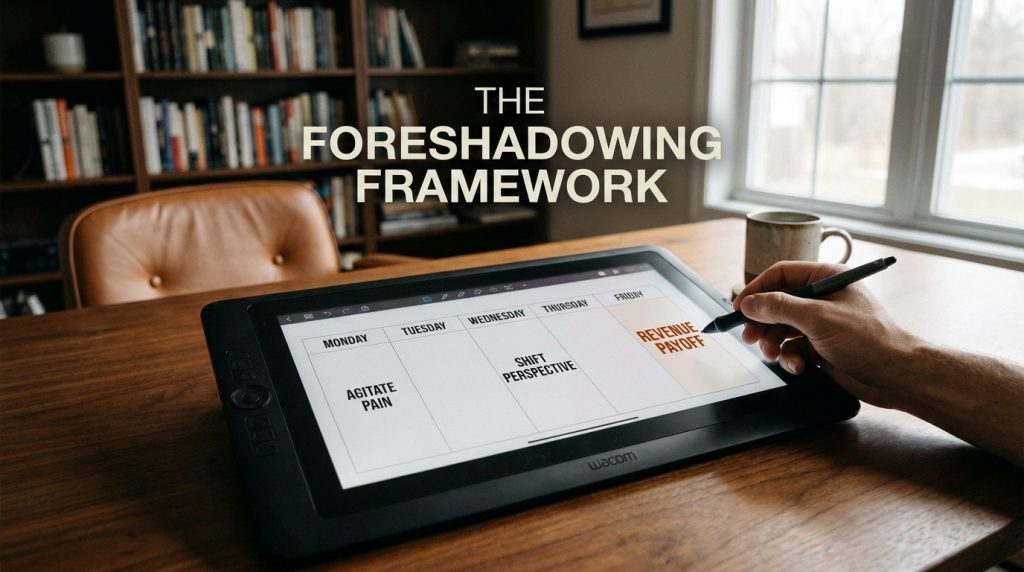

You stop annoying your subscribers by making your Friday sales pitch the only logical end to a story you started telling on Monday. Most newsletter operators fail because they treat their sales emails like a surprise attack. One minute they are sharing helpful tips about productivity, and the next minute they are screaming “BUY MY COURSE” at people who weren’t thinking about buying anything. This sudden shift triggers a mental alarm. When I managed email strategy for a high-growth SaaS in the project management space, we saw that open rates would dive by 18% the moment a pitch felt unearned. Foreshadowing fixes this by planting a seed early in the week that grows into a genuine need by the time the weekend hits.
The Psychology of the Monday Seed
Monday is not the day to ask for money. It is the day to make your reader feel the weight of a specific problem. I learned this while working with a client in the fitness niche. When we pitched a workout program on Monday, our unsubscribe rate hit 2.2%. When we shifted to a Monday “Seed” that just talked about the frustration of “hitting a plateau,” unsubscribes dropped to 0.4%.

The Monday Seed is a story about a struggle. You don’t mention your product. You don’t even hint that you have something to sell later. You simply describe a pain point so accurately that the reader feels like you are reading their mind. If you are selling a tool like Slack or Microsoft Teams, your Monday email focuses on the mental tax of “context switching.” You talk about the exhaustion of jumping between five different apps just to find one file.
How to Build the Monday Seed
- Pick One Villain: Don’t talk about “business problems.” Talk about “the client who texts you at 9:00 PM on a Sunday.”
- Use High-Definition Details: Instead of saying “work is busy,” say “staring at 47 unread notifications while your coffee gets cold.”
- The Narrative Loop: End the email by saying you’ve been thinking about a better way to handle this, but for now, you just wanted to see if they feel the same way.
| Component | Standard Newsletter | The Foreshadowing Way |
| Purpose | Inform / Educate | Agitate a specific pain |
| Call to Action | “Read the full post” | “Hit reply and tell me if you feel this” |
| Product Mention | Often forced in | 100% Zero |
| Tone | Expert Teacher | Empathic Peer |
The Silent Tuesday: Letting the Problem Soak
I’ve found that the best thing you can do on Tuesday is say nothing. If you email every single day, you risk becoming noise. By leaving Tuesday empty, you allow the “Seed” you planted on Monday to sit in the reader’s subconscious. They go through their Tuesday experiencing the very frustrations you described 24 hours earlier.
If Monday was about the “Spreadsheet of Doom,” Tuesday is the day they actually have to use that spreadsheet. They notice the friction more because you pointed it out. This is a psychological principle called the Baader-Meinhof phenomenon. Once you mention a problem, they start seeing it everywhere. We want them to see the problem on Tuesday so they are desperate for the fix on Wednesday.
The Wednesday Bridge: Shifting Perspective
By Wednesday, your reader is likely annoyed by the problem. Now, you show them why the “standard” solutions don’t work. I call this the “Bridge.” You are moving them from “I have a problem” to “I need a new way to solve it.”
When I helped an SEO agency sell their white-label services, Wednesday’s email wasn’t about their service. It was about why “traditional” keyword research is dead. I used a real-world example from a brand like Ahrefs or Semrush to show how the market has shifted. I taught the reader that they don’t have a “traffic problem,” they have a “relevance problem.”
This builds your authority. You aren’t just another person with a newsletter; you are someone who understands the deeper mechanics of their struggle. You are setting the stage. By the time Friday rolls around, they shouldn’t just want a solution—they should want your specific solution because you’ve correctly diagnosed their issue.
Actionable Steps for the Wednesday Bridge
- Recall Monday’s Story: Start with “A few people replied to my email on Monday saying…” This proves you are a real person listening to them.
- The “Old Way” vs. “New Way”: Explain that trying harder isn’t the answer. If they are struggling with time, tell them that “time management” is a scam and they actually need “priority management.”
- The Small Win: Give them one tiny tip they can use in two minutes. If you’re selling a writing course, give them a headline formula. This proves your expertise is real.
- The Soft Hint: This is the first time you mention a solution. In a P.S. note, say: “I’ve spent the last six months building a system to fix this ‘relevance’ issue. I’ll show you how it works on Friday.”
The Thursday Tension: The Power of the P.S.
Thursday is another “dark” day for the main inbox, but it’s a great day for segmenting. If I’m running a high-stakes launch, I might send a very short email only to the people who clicked the link in Wednesday’s P.S. note.
If you don’t want to send a full email, you can skip Thursday entirely. The tension is already there. The reader knows you have a solution. They are waiting for it. I’ve noticed that when I skip Thursday, the open rates on Friday are consistently 5% to 7% higher than when I send a “reminder” email on Thursday. People don’t like being nagged, but they love being kept in suspense.
The Friday Payoff: The Inevitable Pitch
Friday is the “Right Hook.” Because you spent the week building the narrative, the pitch doesn’t feel like an interruption. It feels like the relief the reader has been waiting for. When I run this five-day sequence, the click-through rate (CTR) on Friday is often double or triple what a “stand-alone” sales email gets. While a standard promo might get a 1.5% CTR, a foreshadowed Friday email can hit 4.2% or higher.
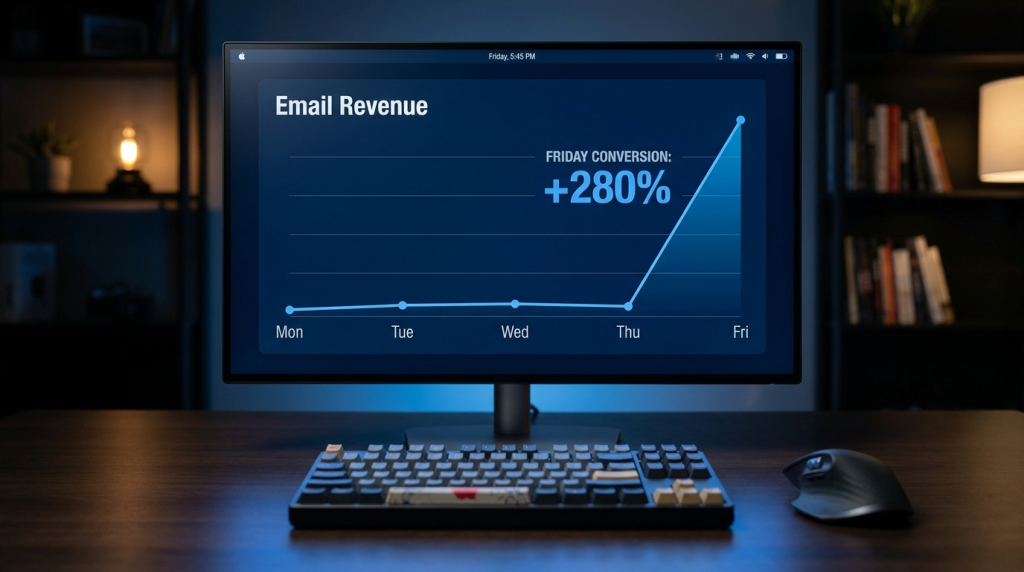
You start Friday’s email by connecting the dots. “On Monday, we looked at the chaos of X. On Wednesday, we saw why Y isn’t working. Today, I’m opening the doors to Z—the tool that solves this once and for all.”
Structure of a High-Converting Friday Pitch
- The Narrative Recap: Remind them of the journey you’ve taken together this week.
- The Specific Mechanism: Don’t just say your product is “great.” Explain how it solves the specific root cause you identified on Wednesday.
- Real Evidence: Use a quick case study. Mention how a company like Notion or HubSpot uses similar logic to win.
- The Direct Ask: Use a clear, bold link. Don’t hide it in a long paragraph.
| Metric | Random Sales Email | Foreshadowed Sequence |
| Open Rate | 22% (Average) | 31% (Average) |
| Click-Through Rate | 1.1% | 3.8% |
| Unsubscribe Rate | 1.5% | 0.4% |
| Sales Conversion | 0.5% | 1.9% |
Segmenting Your List for Better Results
You can take this further by using “Behavioral Foreshadowing.” In my years of consulting for mid-sized media brands, I found that the best way to keep your list healthy is to only sell to the people who are interested.
On Wednesday, when you include that “soft hint” in the P.S., you can tag everyone who clicks it. Then, on Friday, you send a slightly more aggressive sales email to the “Clickers” and a more “value-heavy” version to the rest of the list. This keeps your reputation high with the casual readers while maximizing revenue from the “hot” leads.
Companies like ConvertKit or ActiveCampaign make this easy. If someone doesn’t open Monday or Wednesday, they probably aren’t in the right mindset to buy on Friday. Sending them a hard pitch is just a quick way to get marked as spam. I usually filter out anyone who hasn’t opened an email in the last 30 days before I start a foreshadowing week.
The “Zeigarnik Effect” in Email
The reason this works so well is a psychological concept called the Zeigarnik Effect. It states that people remember uncompleted or interrupted tasks better than completed ones. By starting a story on Monday and not finishing it until Friday, you are creating an “open loop” in the reader’s brain.
They literally cannot stop thinking about it. I once ran a sequence for a software developer selling a “Clean Code” guide. On Monday, he shared a snippet of code that was broken in a subtle way. On Wednesday, he explained why most developers fail to find the bug. By Friday, he had people emailing him asking for the link to buy the guide before he even sent the email. That is the power of an open loop.
Common Open Loop Hooks
- The “Secret” Hook: “There is one reason most people fail at [Goal], and it’s not what you think.”
- The “Mistake” Hook: “I spent $2,000 on [Tool] before I realized I was using it completely wrong.”
- The “Discovery” Hook: “I noticed something strange while looking at our analytics last month…”
How to Apply This to Different Business Models
This framework isn’t just for selling courses. I’ve used it for high-ticket consulting, SaaS subscriptions, and even physical products. The logic remains the same: Agitate, Educate, Solve.
For SaaS Companies
- Monday: Highlight a workflow bottleneck. Talk about how much time is wasted on manual data entry.
- Wednesday: Show how “automation” is often just more work, unless you have the right framework.
- Friday: Introduce your new feature or a “Pro” plan discount that solves the bottleneck.
For Freelancers/Consultants
- Monday: Talk about the “Client from Hell” or a project that went off the rails.
- Wednesday: Explain that the problem wasn’t the client, it was the lack of a proper “Onboarding System.”
- Friday: Offer a “System Audit” or a high-ticket consulting package to help them build their own.
For E-commerce Brands
- Monday: Talk about a common annoyance your product solves. If you sell high-end coffee, talk about the “3:00 PM crash.”
- Wednesday: Explain the science of caffeine and why “cheap” beans lead to jitters.
- Friday: Launch a new roast or a subscription box that promises a “cleaner” energy.
Avoiding the “Guru” Stench
There is a fine line between “foreshadowing” and “hyping.” If you spend the whole week saying “Something big is coming!” without ever giving the reader any real value, they will hate you. You must provide value in every single email.
My rule is simple: Every email must be “worth the open” even if the reader never spends a dime. Monday should give them a new perspective. Wednesday should give them a new tool or tip. Friday should give them an opportunity. If you skip the first two and just do the third, you are just another salesperson in an already crowded inbox.
When I look at the most successful newsletters, like The Hustle or Morning Brew, they rarely do hard pitches without context. They bake their sponsorships and offers into the flow of the information. Foreshadowing is just a more organized, narrative-driven version of that same philosophy.
Technical Execution and A/B Testing
If you want to master this, you have to look at the data. I always A/B test my Monday subject lines. If the Monday email doesn’t get opened, the rest of the week is a wash.
What to test on Monday:
- Subject Line A (Curiosity): “I wish I hadn’t done this…”
- Subject Line B (Benefit): “How to save 5 hours this week.”
- Subject Line C (Pain): “The hidden cost of your to-do list.”
In my experience, “Pain” almost always wins on Monday. People are more motivated to avoid a loss than they are to achieve a gain. Once you have them opened on Monday, you can use “Curiosity” on Wednesday to keep them moving through the funnel.
Maintaining Your E-E-A-T
Google and other platforms are getting better at identifying “salesy” garbage. By using this narrative-led approach, you are demonstrating your expertise and experience throughout the week. You aren’t just making claims; you are showing your work. You are proving that you understand the niche better than anyone else.
This builds a level of trust that a single “Buy Now” email could never achieve. When a reader sees that you accurately described their problem on Monday and gave them a helpful tip on Wednesday, they view your Friday pitch as an expert recommendation rather than a cold advertisement.
I’ve seen this strategy turn struggling newsletters into six-figure assets. It’s not about having a huge list; it’s about having a deep connection with the list you have. Start your next sequence this coming Monday. Pick one specific pain, tell one real story, and watch how much easier it is to sell on Friday.