

Stop ending your B2B newsletters with “Thanks for reading, see you next Tuesday.” That is exactly why your list engagement bleeds out after month four. To build a newsletter where subscribers actively search their promotions folder for your name, you have to engineer a psychological itch using the Zeigarnik effect—the brain’s hardwired need to finish incomplete tasks. I spent the last six years writing retention sequences for enterprise SaaS platforms and boutique marketing agencies. We stopped treating emails like isolated essays. We started treating them like episodes of Succession.
Most B2B newsletters launch with an impressive 40% to 50% open rate on the welcome email. By month six, that number flatlines to industry averages around 21.3%. The drop happens because your content is predictable. You solve a problem, wrap it up neatly in a bow, and the reader closes the tab totally satisfied. Satisfaction breeds apathy. You want your readers slightly dissatisfied when they finish reading.
Reverse-Engineering the Streaming Cliffhanger for B2B

If you watch the season one finale of Severance, the writers do not tie up the plot. They push the protagonist to the exact moment of a massive revelation, let him shout one sentence, and cut to black. The brain cannot handle the missing information.
In B2B copywriting, we adapt this by introducing a highly specific, unsolved variable just before the sign-off. I call this the Micro-Cliffhanger. You give the reader 90% of the value they came for. Then, you open a brand new, highly relevant problem in the last 50 words.
The “Incomplete Process” Loop
Standard marketing advice tells you to tease the next issue with generic phrasing like, “Next week, we cover SEO.” Nobody cares about broad topics. Instead, expose a hidden flaw in the exact strategy you just taught them.
The Copy-Paste Formula: “You now have the exact workflow to automate your lead routing. But there is a silent error in Zapier that misroutes 14% of these leads if they use a custom domain. I found the exact filter condition to fix it. I will show you where to place that filter in next Thursday’s email.”
The “Paradigm Shift” Loop
This works best when transitioning from a tactical email to a broader strategy email. You challenge a core belief right at the exit door. Companies like Morning Brew and Trends.co use variations of this to keep daily readers hooked. You want to make the reader question if their current foundation is stable.
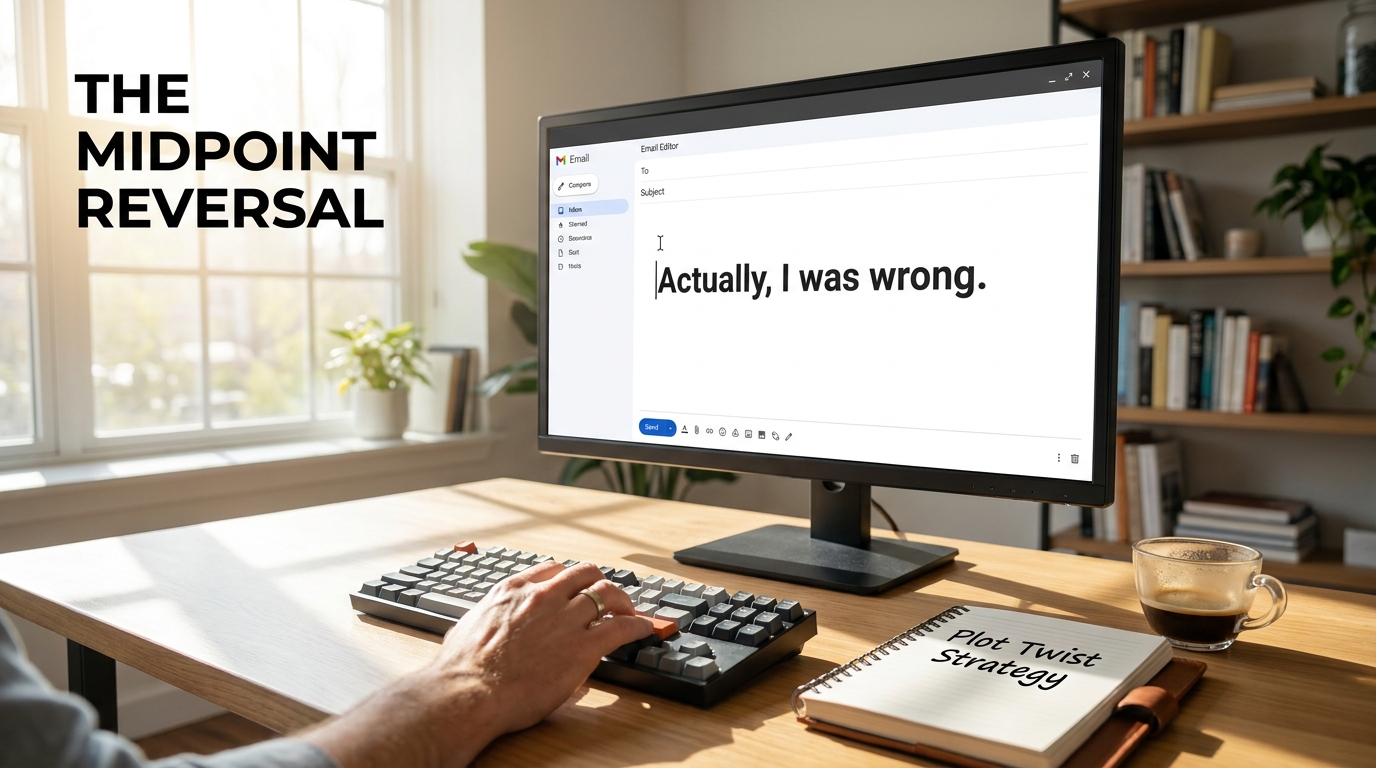
The Copy-Paste Formula: “That is how we dropped our Customer Acquisition Cost by $40 this quarter. But honestly, focusing on CAC is probably going to ruin your margins next year anyway. We are moving our entire tracking system to a completely different metric starting Monday. I will break down our new dashboard template next week.”
The “Data Tease” Loop
B2B readers love benchmarks. They need to know if they are falling behind their competitors. You leverage this by introducing a specific, surprising data point without providing the context.
The Copy-Paste Formula:
“We just audited 400 cold outreach campaigns from Q3. One specific subject line formula generated a 62% open rate, while the rest hovered around 18%. The weird part? It only uses three words. I am writing the full breakdown of why it works right now. Look for it in your inbox on Tuesday.”
Context and Decision Matrix: Choosing the Right Loop

You cannot use the same cliffhanger format every week. Your audience will catch on. You have to rotate the psychological triggers based on the core focus of your newsletter. The table below breaks down exactly when to deploy each loop type, the expected reader reaction, and the risk level of causing audience fatigue.
| Newsletter Core Focus | Optimal Open Loop Framework | Expected Reader Psychology | Risk of List Fatigue |
| Analytical / Industry Data | The “Withheld Metric” Tease | “I need that exact benchmark to compare my team’s performance.” | Low |
| Case Study / Founder Story | The “Hidden Cost” Reveal | “Wait, what did that specific mistake cost their business?” | Medium |
| Tactical / How-To Guides | The “Next Bottleneck” Warning | “I just fixed X, now I have to worry about Y?” | High (Use sparingly) |
Rotating these frameworks prevents the tactic from feeling like a cheap gimmick. If you run a tactical how-to newsletter every Tuesday, lean heavily on the “Next Bottleneck” loop. Swap in a “Withheld Metric” loop once a month to reset expectations and keep the cadence unpredictable.
Where Open Loops Fail (And How to Avoid the Bounce)
The quickest way to destroy your sender reputation is writing checks your next email cannot cash. I learned this the hard way while managing a weekly dispatch for a supply chain SaaS. We promised a “massive fulfillment hack” in a cliffhanger. The next email just announced a basic UI feature update. Our unsubscribe rate spiked to 1.8% on a single send, up from our usual 0.2%. The trust was broken instantly.
Here are the exact points of failure you need to avoid when structuring these transitions:
- The Bait and Switch: If your loop promises a specific workflow template, the very next email must deliver that template in the first 100 words. Do not bury it at the bottom. Do not make them click three times to find it.
- The Over-Hype: Avoid adjectives. “I’ll share a mind-blowing trick” sounds like spam. “I’ll share the exact three-step script we use” sounds like actionable business intelligence. Let the specificity do the heavy lifting.
- The Exhaustion Threshold: If you leave readers hanging on massive, existential business problems every single week, you create anxiety. Anxiety causes unsubscribes. Solve small problems completely. Only loop the micro-problems.
Frequently Asked Questions
How do I measure if an open loop actually worked?
Look at your cohort open rates, not your overall average. Tag the users who opened the email containing the cliffhanger. Check the open rate of that specific cohort on the next email. If that cohort’s open rate jumps above 45%, the loop held their attention.
Can I use open loops in sales sequences or just newsletters?
They work exceptionally well in cold outreach and SaaS onboarding sequences. In onboarding, ending an email with “Tomorrow, I’ll show you the one setting most new users forget to toggle that costs them 3 hours a week” dramatically increases day-two software login rates.
What if I don’t know what I am writing about next week?
You cannot use this strategy if you write by the seat of your pants. You need a minimum two-week content buffer. You must have the next email drafted, or at least heavily outlined, so you can extract a highly specific detail for the cliffhanger.
The Execution Checklist
- Review your current email draft.
- Identify the main problem you just solved for the reader.
- Find the immediate next problem that your solution creates.
- Write a two-sentence tease exposing that new problem.
- Schedule the send.