The Math That Makes Consolidation Worth Considering in 2027
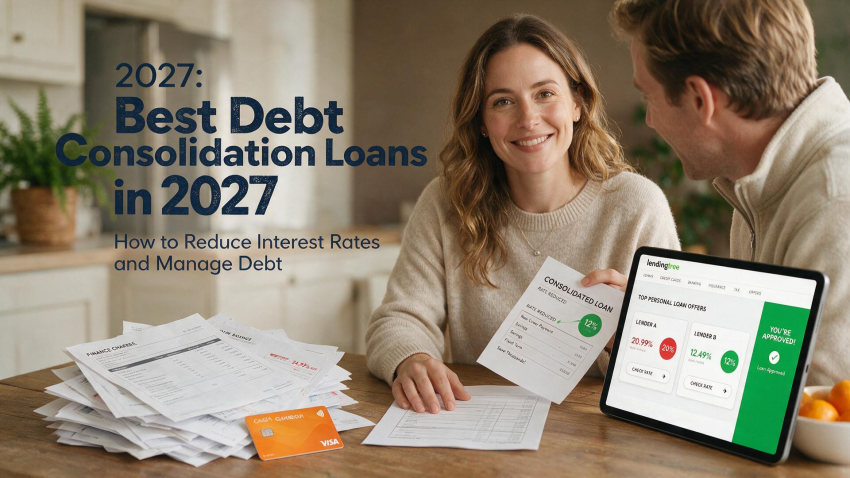
Credit card debt has a way of feeling manageable right up until you actually run the numbers. The average American carrying a balance owes roughly $6,600, and at the average commercial bank APR of just over 21 percent, that balance generates about $1,462 in interest charges over the course of a year. That is not a hypothetical figure pulled from a marketing brochure. It flows directly from Federal Reserve data, and it represents money that vanishes from your budget without reducing the principal by a single dollar. For anyone juggling multiple cards with rates pushing 25 percent or higher, the annual interest bill can easily exceed several thousand dollars, and the minimum payments barely make a dent in the underlying balance. This is the trap that makes best debt consolidation loans 2027 a search term worth taking seriously rather than dismissing as another financial product pitch.
What makes 2027 a particularly relevant year for this decision is the trajectory of interest rates. Goldman Sachs Research has pushed its forecast for the Federal Reserve’s next rate cuts to June and December of 2027, citing stronger-than-expected economic activity and labor market resilience. For borrowers carrying credit card balances, that delay is painful news. Card APRs are tied to the prime rate, which moves with the federal funds rate, and issuers have historically been far slower to lower rates after Fed cuts than they were to raise them after hikes. Even when cuts eventually arrive, the relief at the card statement level is muted. A borrower paying 24 percent might see that rate drop to 23 percent or 22 percent, which does almost nothing to change the fundamental math of carrying a large balance. The only way to achieve a meaningful reduction in interest cost is through a deliberate restructuring, not by waiting for the rate environment to do the work for you.
That restructuring can take several forms, and not all of them are created equal. A debt consolidation loan is the most straightforward: you borrow a lump sum from a bank, credit union, or online lender, use the proceeds to pay off your existing creditors, and then repay the new loan in fixed monthly installments over a set term. If you qualify for a rate meaningfully below what you are currently paying on your cards, the savings can be substantial. But the qualification is the crux of the matter. Lenders price consolidation loans based on your credit profile, and if your credit score has already been damaged by high utilization or late payments, the rate you are offered may not be much better than the rates on the cards you are trying to escape. The Consumer Financial Protection Bureau is blunt about this risk: if problems with debt have affected your credit score, you probably will not be able to get low interest rates on a consolidation loan. Understanding where you fall on that spectrum before you apply is the difference between a strategy that works and one that simply moves the problem around.
Comparing Debt Consolidation Rates and the Traps That Undermine Savings
The headline rate on a consolidation loan is not the number that determines whether you save money. The annual percentage rate, or APR, is the figure that matters, because it folds in origination fees and other costs that the interest rate alone ignores. A loan advertised at 11 percent with a five percent origination fee can be more expensive than a loan at 13 percent with no fee, particularly if you plan to repay it early. The CFPB warns that many of the low interest rates advertised for debt consolidation loans are teaser rates that only last for a certain period, after which the lender may increase the rate you have to pay. Reading the full terms, not just the banner on the lender’s homepage, is not optional. It is the entire exercise.
The term length is the other variable that deserves scrutiny. Extending the repayment period lowers the monthly payment, which can provide genuine relief if your current minimums are stretching your budget to the breaking point. But a longer term also means more months of interest accruing, and the total cost of the loan can end up exceeding what you would have paid by staying on your cards and attacking the balances aggressively. The CFPB puts it plainly: although your monthly payment might be lower, it may be because you are paying over a longer time, which could mean you will pay a lot more overall. A three-year loan at a slightly higher rate often costs less in total interest than a seven-year loan at a lower rate, and the discipline of a shorter payoff horizon prevents the kind of complacency that sets in when a debt feels comfortably distant. Before committing to any debt consolidation rates, run the full amortization schedule for both a shorter and a longer term and compare the total interest paid, not just the monthly obligation.
Lender selection matters enormously, and the range of offers available to the same borrower on the same day can be surprisingly wide. Credit unions frequently beat banks and online lenders on rates for members, though membership requirements vary. Online lenders have streamlined the application process and some offer same-day approval, but their pricing is often calibrated for borrowers with good to excellent credit. A borrower with a 680 score might find that the best offer available to them comes from a lender they have never heard of, while the familiar names on the comparison sites return quotes two or three percentage points higher. Prequalification tools, which use a soft credit pull, allow you to see estimated rates from multiple lenders without damaging your score. Applying to several lenders within a short window is generally treated as a single shopping event by scoring models, so there is no penalty for thoroughness. The personal debt solutions that work best are rarely the first ones you encounter; they are the ones that emerge after you have done the comparison work.
There is also the question of what happens to your credit cards after consolidation. The single most common mistake borrowers make is paying off the cards with the loan proceeds and then running the balances back up, ending up with both the consolidation loan payment and a fresh pile of credit card debt. The CFPB explicitly warns that taking on new debt to pay off old debt may just be kicking the can down the road, and that many people do not succeed in paying off their debt by taking on more debt unless they lower their spending. Closing the paid-off accounts can hurt your credit score by reducing your available credit and shortening your history, but leaving them open with zero balances requires discipline that many borrowers underestimate. A middle path, keeping one or two accounts open for emergencies but physically removing the cards from your wallet, is often the most practical compromise.
When a Debt Management Plan Beats a Consolidation Loan
Not everyone who needs relief from credit card debt can qualify for a consolidation loan at a rate that makes the math work. For borrowers whose credit has already suffered, or whose debt-to-income ratio is too high for a conventional lender’s underwriting standards, a debt management plan offers a different path. A DMP is administered by a nonprofit credit counseling agency, which negotiates with your creditors to reduce interest rates and waive fees, then consolidates your payments into a single monthly amount that you pay to the agency for distribution to your creditors. The structure is similar to a consolidation loan in that you make one payment instead of many, but the mechanism is fundamentally different: the agency is negotiating concessions from your existing creditors rather than lending you new money.
The costs and credit implications of a DMP deserve careful consideration. Setup fees typically run $25 to $75, and monthly service fees range from $20 to $70. Most DMPs take three to five years to complete. Your credit score may drop in the short term, primarily because you will likely be required to close the credit card accounts included in the plan, which spikes your utilization ratio. But unlike debt settlement or bankruptcy, a DMP does not cause lasting damage, and the on-time payments you make through the plan can help rebuild your score over time. The key advantage is that the reduced interest rates negotiated by the agency apply regardless of what the Fed does or what your credit score looks like at the outset. For borrowers who are still able to make monthly payments but need breathing room, a DMP can be a more realistic entry point than a loan application that is likely to be declined or priced punitively.
The choice between a consolidation loan and a DMP often comes down to creditworthiness and urgency. If your credit is still in decent shape and you can qualify for a rate in the single digits or low teens, a consolidation loan is usually the faster and cheaper route. If your credit has already been damaged, or if you have been missing payments, a DMP allows you to access negotiated rate reductions that would not be available to you on the open market. The debt management plans offered by nonprofit agencies are not a magic solution, and they require a genuine commitment to changing spending habits, but they provide a structured exit from the cycle of minimum payments that traps so many borrowers. Working with a counselor approved by the National Foundation for Credit Counseling or the Financial Counseling Association of America ensures you are dealing with a legitimate organization rather than one of the predatory outfits that prey on desperate borrowers.
The Risks Nobody Talks About Until It Is Too Late
The most dangerous consolidation option is the one that uses your home as collateral. A home equity loan or home equity line of credit can offer a lower interest rate than an unsecured consolidation loan, and the interest may be tax-deductible if the funds are used to improve the home, though not if they are used to pay off credit cards. The lower rate is seductive. But the CFPB’s warning is unambiguous: using a home equity loan to consolidate credit card debt is risky because if you do not pay back the loan, you could lose your home in foreclosure. You are converting unsecured debt, which can be discharged in bankruptcy, into secured debt that puts your housing at risk. The closing costs on a home equity loan can also run into the hundreds or thousands of dollars, eroding the savings from the lower rate. And if home values decline, you could end up underwater on your mortgage, making it harder to sell or refinance. For most borrowers, the rate advantage of a home equity loan is not worth the catastrophic downside risk.
Balance transfer cards are another option that looks better on paper than it often proves in practice. A zero-percent promotional offer can save you real money on interest for twelve to twenty-one months, but the transfer fee, typically three to five percent of the amount moved, is charged upfront and adds to your balance immediately. The CFPB notes that if you use the same card to make new purchases, you will not get a grace period on those purchases, and you will have to pay interest until you pay the entire balance off in full, including the transferred amount. More importantly, the promotional rate expires, and the post-promotion rate on a balance transfer card is often higher than what you were paying before. If you cannot clear the balance within the promotional window, you have simply postponed the problem at a cost. The credit card debt consolidation strategy only works if the promotional period is long enough and your repayment capacity is sufficient to eliminate the balance before the standard rate kicks in.
The final risk is the one that no lender or counselor can protect you from: spending behavior. The CFPB is direct about this, noting that if you have accrued a lot of debt because you are spending more than you are earning, a debt consolidation loan probably will not help you get out of debt unless you reduce your spending or increase your income. The loan does not change the underlying cash flow problem. It simply rearranges the obligations. If the monthly payment on the new loan is lower than the combined minimums on your cards, you may find yourself with a little breathing room, and that breathing room can either be used to build an emergency fund and address the spending habits that created the debt, or it can be absorbed into the same consumption patterns that got you there in the first place. The debt relief programs that produce lasting results are the ones that pair financial restructuring with behavioral change. Without the second piece, the first piece is just a temporary reprieve.
Building a Repayment Plan That Outlasts the Loan Term
The consolidation loan is a tool, not a solution. What you do after the loan closes determines whether it was a smart move or an expensive detour. The first priority is establishing an emergency fund, even a modest one, before another unexpected expense forces you back onto the cards. A thousand dollars in a high-yield savings account is enough to absorb most car repairs and minor medical bills without derailing your repayment plan. The second priority is automating the loan payment so it happens on the same day as your paycheck, removing the temptation to spend the money elsewhere. The third priority is reviewing your budget with honesty about where the money was actually going before the consolidation. If the answer is not clear, a month of tracking every expense will reveal patterns that are invisible when you are simply trying to get through each week.
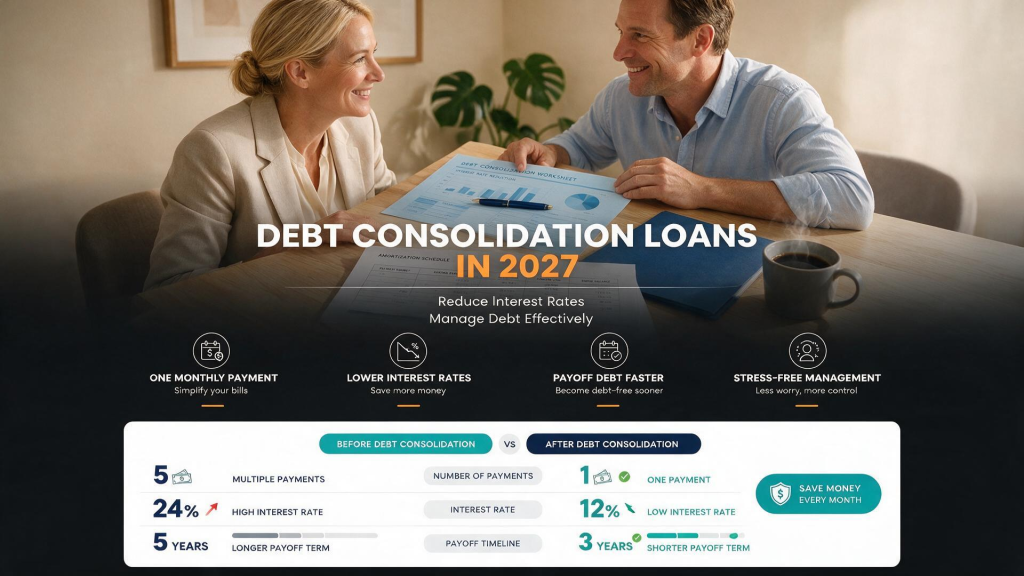
The loan term itself should be chosen with a realistic assessment of your income stability. A five-year term on a $20,000 loan at 12 percent APR carries a monthly payment of roughly $445, and the total interest paid over the life of the loan is about $6,700. Stretching to seven years reduces the monthly payment to around $353, but the total interest climbs to nearly $9,700. The difference in monthly cash flow is real, but the difference in total cost is also real, and the longer term keeps the debt hanging over your head for two additional years during which your financial circumstances could change in unpredictable ways. The personal debt solutions that stand up to scrutiny are the ones where the borrower understands exactly what they are trading: a lower monthly obligation now in exchange for more interest paid later. That trade is sometimes necessary. It should never be accidental.
One final consideration is worth raising for anyone who is weighing consolidation against simply paying off the cards without borrowing. The debt avalanche method, which prioritizes the highest-interest balance while making minimum payments on everything else, produces results that can rival consolidation for borrowers with sufficient discipline and cash flow. It does not require a credit check, does not add a new account to your report, and does not carry the risk of a loan payment becoming unmanageable if your income drops. For borrowers who have the means to make meaningful progress on their own, the avalanche is often the better choice. Consolidation makes the most sense when the rate reduction is substantial, the monthly savings are meaningful, and the borrower needs the structure of a fixed payoff schedule to stay on track. The best debt consolidation loans 2027 are not the ones with the flashiest advertising or the lowest teaser rates. They are the ones that fit your actual financial situation, from a lender that will still be there when you need to call, at a total cost that leaves you better off than the alternative of doing nothing at all.