


How many notes do you have? Not just in one app. Across everything — your phone, your laptop, your work tools, maybe a physical notebook or two. If you are a regular note-taker, the number is probably in the hundreds. Maybe thousands.
Now: how many of those notes have you opened more than once?
When I asked myself that question, the answer was embarrassing. I had over 600 notes across three apps. I had opened fewer than 40 of them a second time. The remaining 560 were essentially dead — information I captured with good intentions and then never looked at again. A digital graveyard of things I thought were worth remembering but was not willing to actually revisit.
The problem was never capture. I am great at capture. I write things down. I clip articles. I save highlights. The problem was that I had no habit attached to reviewing what I captured. And without review, notes are not knowledge. They are just text sitting in a database, producing nothing.
Why Capture Without Review Is Worthless
Note-taking apps are optimized for capture. Quick capture widgets, browser extensions, share sheets, voice memos — they make it incredibly easy to save information. What they do not do is build in a habit of returning to that information.

The result is a one-way funnel. Ideas flow in and never come back out. You capture a useful framework from a book. You note an idea from a podcast. You save a process from a meeting. They go into the system and are immediately buried by the next wave of captures.
| Stage | What Most People Do | What Effective Note-Takers Do |
| Capture | Save everything that seems interesting | Save selectively — only things they will act on |
| Organize | Create folders or tags at first, then stop | Use minimal structure that is easy to maintain |
| Review | Rarely or never | Scheduled weekly review of recent captures |
| Use | Almost never retrieve old notes | Actively pull from notes when writing, planning, or presenting |
The Friday Review: One Habit That Changes Everything
The single habit that turned my notes from a graveyard into a functional tool is a 15-minute review every Friday afternoon. Not a review of all my notes — that would take hours. Just a review of the notes I captured that week plus a quick scan of three to five older notes.
Here is the exact process:
Step 1: Open This Week’s Notes (5 Minutes)
I scan every note I created or edited during the past seven days. For each one, I ask: “Is this still relevant? If yes, does it connect to anything I am currently working on?”

If a note connects to a current project, I add a line at the top linking it to that project. If it does not connect to anything and is not likely to be useful later, I delete it. This sounds harsh, but it keeps the system lean. A collection of 100 genuinely useful notes is infinitely more valuable than 1,000 notes of mixed relevance.
Step 2: Revisit Three Older Notes (5 Minutes)
I open three random older notes. Some apps have a “random note” feature. If yours does not, just scroll to a random spot and pick three. Re-reading old notes does two things: it refreshes ideas you have forgotten, and it often creates unexpected connections between old thinking and current work.
About once a month, I find an old note that is directly relevant to something I am working on right now. That one connection justifies the entire review habit. The compound interest of revisiting old ideas is real, but it only works if you actually revisit them.
Step 3: Delete or Archive (5 Minutes)
Anything that has lost its relevance gets deleted. Notes from events that have passed, ideas that you have since superseded, reference material that is now outdated — get rid of it.
I know this is difficult. Every note feels like it might be useful someday. But “someday” never comes for 90% of your notes. The ones that matter will survive the weekly cull. The ones that do not matter were taking up space and mental bandwidth.
What Happens After a Month of Friday Reviews
After four weeks, three things change:
- Your note collection shrinks. It gets leaner and more relevant. Opening your notes app stops feeling like opening a warehouse and starts feeling like opening a toolkit.
- You start capturing differently. Knowing that you will review each note on Friday changes how you capture during the week. You become more selective because you know you will have to justify each note’s existence in a few days.
- You start using your notes. This is the big one. When you regularly review your notes, your brain starts to remember what is in them. And when a situation arises where that information is relevant, you reach for it. The notes become a working tool, not a backup.
Common Objections
“I do not have time for a weekly review.”
You have time. Fifteen minutes on Friday afternoon. That is less time than you spent last week trying to remember where you saved that one piece of information you know you wrote down somewhere.
“What if I delete something I need later?”
In fourteen months of weekly note pruning, I have needed a deleted note exactly once. I found the same information again via a web search in about 30 seconds. The fear of deleting is almost always disproportionate to the actual cost.
“My notes are too messy to start reviewing.”
Then do your first review session focused entirely on deletion. Go through your oldest notes and delete everything that is obviously outdated. This can cut your collection by 30-50% in a single session and makes subsequent reviews much more manageable.
A Note Collection Is a Garden, Not a Library
Libraries store everything permanently. Gardens require regular tending — planting new things, pruning what is dead, watering what is growing. Your notes should work like a garden.
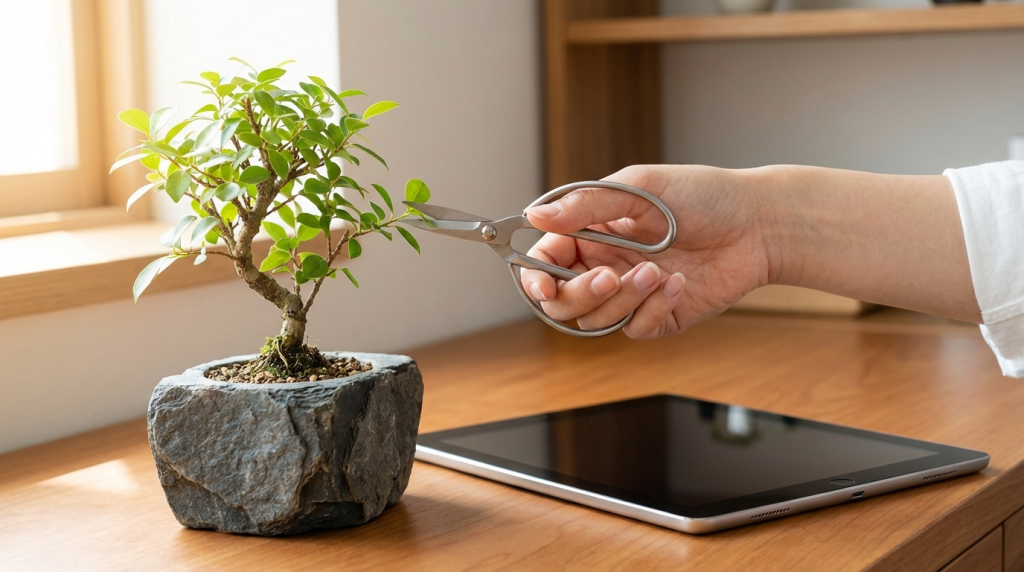
If you only capture and never review, you get a library that nobody visits. If you capture, review, prune, and connect, you get a living system that actively supports your thinking and your work.
The entire difference between those two outcomes is one habit: fifteen minutes, every Friday. Start this week.